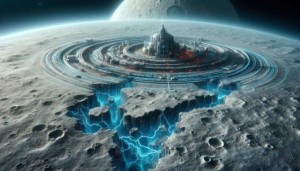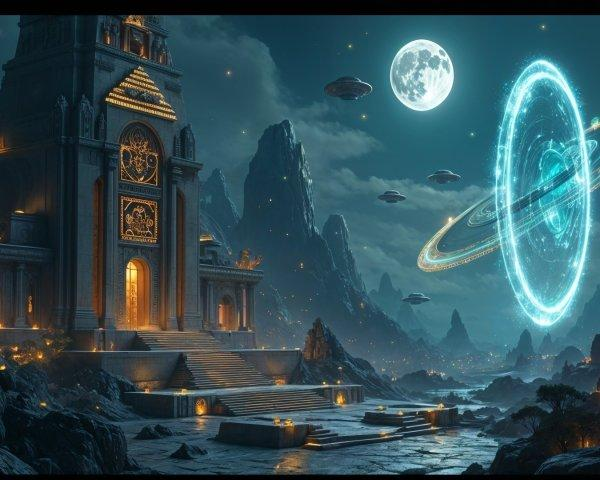
There are plenty of science fiction novels that promise big ideas. Some deliver breathtaking technology. Others build incredible alien worlds. Then there are books that ask a question so unexpected that you can’t stop thinking about it. Within the Moon by Daniel JP O’Sullivan starts with one of those questions.
What if the Moon has never been just a lifeless rock orbiting Earth? What if it has been hiding something far greater all along?
That mystery is enough to grab any science fiction fan, but it’s only the beginning. As the story unfolds, advanced civilizations, forgotten history, political conflict, and time travel begin to connect in ways that feel surprisingly natural. Instead of throwing every science fiction idea into the same story, Daniel JP O’Sullivan carefully builds a world where each piece belongs.
Ancient Legends Get a New Perspective
History has always been filled with stories that refuse to disappear. Every civilization has myths about powerful beings, lost knowledge, and extraordinary events that seem impossible by today’s standards. Within the Moon doesn’t simply borrow those legends for decoration. It asks readers to look at them from another angle.
What if ancient myths weren’t entirely myths?
Without giving away major plot points, the novel introduces ideas that connect mythology with advanced science in a believable way. Familiar legends begin to take on new meaning, and suddenly the impossible doesn’t seem quite so impossible anymore. That’s part of what makes the story so enjoyable. Every discovery encourages you to question something you thought you already understood.
Time Travel That Has Real Consequences
Time travel appears in countless science fiction books, but it often becomes little more than a shortcut for creating action or unexpected twists. Here, it carries real weight.
The story explores how one decision can ripple across generations. Changing history isn’t treated like a clever trick. It’s risky, emotional, and filled with consequences that nobody can completely predict. That approach gives every moment more importance. Instead of wondering how characters will escape the next challenge, readers also begin asking whether some events should ever be changed at all.
Those questions stay with you long after you’ve finished reading.
The Moon Is More Than a Setting
The title immediately sparks curiosity, and the novel doesn’t waste that opportunity. The Moon isn’t simply the backdrop for the adventure. It’s one of the story’s biggest mysteries. Hidden beneath its quiet surface is a secret that reshapes everything the characters believe about humanity, civilization, and the future. As that mystery slowly unfolds, each chapter reveals another layer without rushing to explain everything at once.
That steady pace works in the book’s favor. Instead of overwhelming readers with endless explanations, Daniel JP O’Sullivan allows curiosity to do the heavy lifting. The deeper the characters go, the more fascinating the mystery becomes.
Science Fiction With Characters Who Feel Human
Big ideas only work when readers care about the people experiencing them. One of the strengths of Within the Moon is that every major character brings a different way of looking at the same situation. Scientists search for answers. Military leaders focus on survival. Political figures wrestle with power and responsibility. Their personalities often collide, creating tension that feels genuine instead of forced.
No one has all the answers. Everyone carries personal beliefs, ambitions, and doubts into the mission. Those differences make conversations just as engaging as the action itself. Even while exploring futuristic technology and alien civilizations, the novel never loses sight of human nature.
More Than Spaceships and Alien Worlds
Readers expecting only a space adventure may be surprised by how many larger ideas are woven into the story. Beneath the action, Within the Moon explores questions that don’t have easy answers.
- How much of human history is still unknown?
- Does advanced knowledge automatically create wisdom?
- Can power ever exist without responsibility?
- Should one civilization decide another civilization’s future?
These aren’t presented as lectures. They grow naturally from the story, giving readers plenty to think about without slowing the pace. That’s one reason the novel appeals to readers who enjoy thoughtful science fiction as much as action-packed adventures.
A Story That Refuses to Stay in One Genre
Trying to place Within the Moon into a single category isn’t easy.
It’s a space adventure, but it’s also a time travel novel.
It explores alien civilization, yet it spends just as much time examining humanity.
It feels like epic science fiction, while drawing inspiration from ancient civilizations and timeless myths.
Those different elements don’t compete with one another. They strengthen the story, creating a world that feels larger every time another piece falls into place. By the time everything begins connecting, it’s clear this isn’t simply another futuristic thriller. It’s a novel built around curiosity, discovery, and the possibility that the universe still holds secrets beyond our imagination.
Final Thoughts
Some books entertain you for a weekend. Others leave you searching for answers after you’ve closed the final page. Within the Moon belongs to the second group.
Daniel JP O’Sullivan has created a science fiction novel that combines mystery, mythology, space exploration, first contact, and futuristic ideas into a story that feels both imaginative and believable. It doesn’t rely on nonstop action to keep readers interested. Instead, it rewards curiosity with every chapter, gradually revealing a bigger picture that becomes harder to put down.
If your bookshelf already includes the best sci-fi books, and you’re looking for something that explores familiar ideas from a fresh perspective, Within the Moon is a journey well worth taking. It’s the kind of story that reminds you why science fiction continues to capture our imagination in the first place.